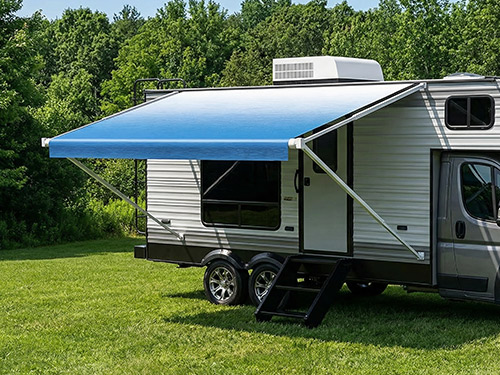
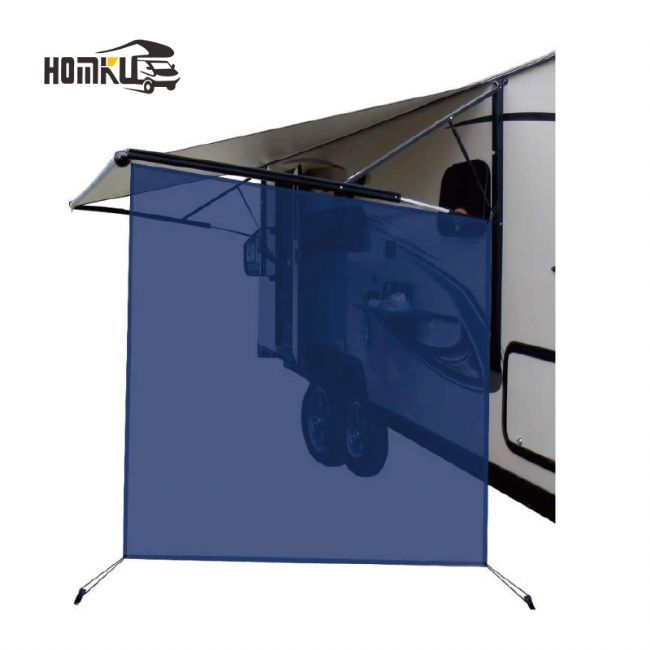
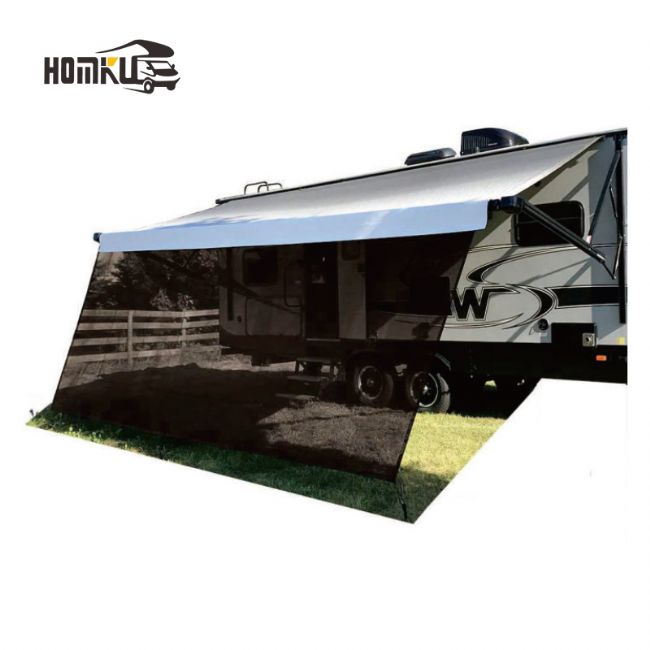
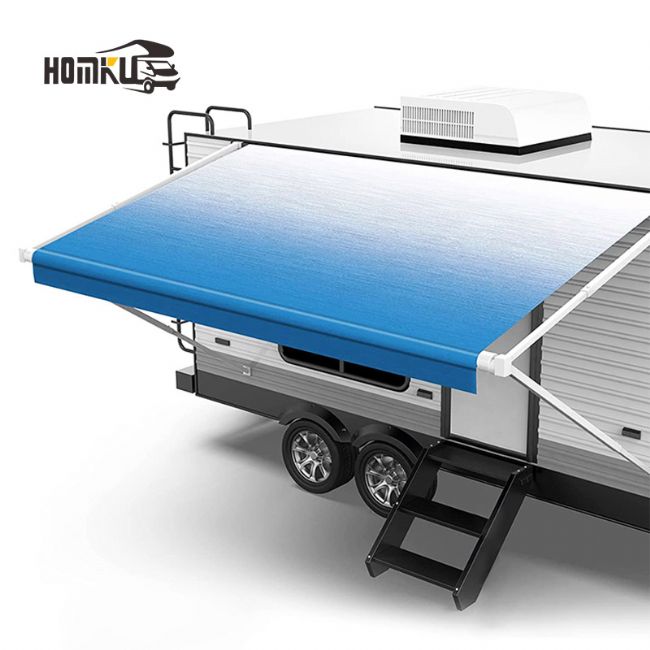
A well-chosen RV awning fabric replacement isn’t just a cosmetic refresh. It changes how comfortable the campsite feels (shade and UV), how often owners need to scrub and treat the fabric (mildew resistance), and how confident they are when weather turns unpredictable (waterproofing). Homku’s RV awning fabric replacement is positioned exactly around those real-world needs: PVC tarpaulin, three-layer construction, 380gsm, strong waterproof and mildew resistance, and UV blocking over 99.9%, with custom colors and sizes available.
What an RV awning fabric replacement actually does
At a basic level, replacement fabric restores the function of a patio awning: shade, comfort, and a "dry-ish” outdoor area. But in practice, it does more:
- Controls heat and UV exposure: a good fabric reduces harsh sun and helps keep the living area cooler. Homku states its fabric blocks over 99.9% of UV rays.
- Manages moisture: rain happens; the key is how the material resists water absorption and how easily it dries. Homku’s PVC tarpaulin is positioned as waterproof and mildew resistant.
- Improves appearance and resale appeal: a clean awning makes an RV look cared for—especially for rental fleets and used inventory.
For B2B buyers, the "job” of the fabric is also commercial: fewer complaints, fewer warranty calls, and fewer returns from end customers who expected "outdoor-ready” and got "fussy and fragile.”
Material choices in the market—and why specs matter more than names
You’ll see the market describe awning fabrics using terms like "vinyl,” "acrylic,” "laminated,” "PVC,” and "tarpaulin.” Those labels can be useful, but they can also be vague if you don’t anchor them to measurable specs.
Homku clearly states its awning replacement fabric is PVC tarpaulin with a three-layer design, at 380 grams per square meter.
Those details matter because they help buyers evaluate:
- Weight and hand-feel (GSM is a useful proxy for thickness/durability expectations—though not the only one)
- Layer structure (three-layer can imply improved stability and weather performance, depending on construction)
- Consistency across custom orders (a spec’d construction is easier to standardize for distribution programs)
In other words: if you’re sourcing for multiple customers or channels, you want "repeatable” more than you want "mystery fabric that might change next batch.”
What makes Homku’s RV awning fabric replacement different
Homku’s product positioning is straightforward and procurement-friendly:
- PVC tarpaulin for waterproof and mildew resistance
- Three-layer construction
- 380gsm fabric weight
- UV blocking over 99.9%
- Custom colors and sizes available
For buyers, the practical takeaway is: this is built for common pain points—water, mildew, sun—plus customization for brand programs and replacement-fit variety.
Homku also positions itself as a wholesale RV parts and accessories supplier serving business customers, and notes it manufactures RV awning and canopy systems (including fabric and hardware).
That matters if you’re managing multiple SKUs and want a supplier who understands system compatibility—not just raw fabric.
Use cases that drive repeat orders (and fewer "it didn’t fit” issues)
A replacement fabric program can serve multiple buyer groups:
- RV dealers and service shops: quick refresh for trade-ins, repairs, and customer upgrades.
- Rental fleets: keeping awnings clean and functional reduces customer complaints and protects your outdoor "living space” upsell.
- Distributors and e-commerce sellers: strong spec messaging (PVC, 3-layer, 380gsm) simplifies listing creation and expectation setting.
- Aftermarket upgrade customers: custom colors can support "match the rig” style preferences and private-label programs.
The hidden advantage: replacement fabric is a "maintenance SKU.” When the market is slow on new RV sales, maintenance parts often stay active because RVs don’t stop aging.
Installation and sizing—where most mistakes happen
Let’s be honest: many "fabric problems” are actually measurement problems.
While Homku states custom sizes are available, your ordering accuracy still depends on consistent measurement rules.
A good internal process usually includes:
- Identify whether you’re replacing the patio awning fabric (main canopy) or another awning type.
- Confirm the awning’s brand/model and the roller tube / hardware system if applicable.
- Measure using a consistent method (your service department likely already has a standard).
- Verify edge details (common systems use beaded edges that slide into tracks—confirm what your hardware requires).
If you’re selling to end users, make measurement guidance part of your listing and post-purchase emails. It’s cheaper than returns.
Care and maintenance tips that actually reduce mildew complaints
Homku emphasizes mildew resistance, but real-world results still depend on user habits—especially in humid climates.
These tips help customers get the best outcome:
- Dry before storage when possible: retracting an awning wet for days is basically an invitation for odor and staining.
- Rinse dust / pollen regularly: grime can hold moisture and accelerate staining.
- Use mild cleaners: harsh solvents can damage coatings or finishes over time (and can void warranties depending on policy).
- Check drainage and pitch: pooling water stresses fabric and hardware.
A little humor you can use in customer education: "Your awning is not a swimming pool. If it’s holding water, it’s filing a complaint.”
Trend watch—what buyers are asking for now
Across the replacement market, demand tends to concentrate around a few themes:
- More UV protection messaging (especially for sunbelt markets)
- Lower-maintenance materials (waterproof and mildew resistance are top-of-mind)
- Customization (color matching, branded programs, consistent SKUs for distributors)
Homku’s product page aligns with these trends directly: UV blocking claim, waterproof/mildew positioning, and custom color/size capability.
FAQ
1) What is an RV awning fabric replacement?
A: It’s the replacement canopy material that restores shade and weather protection on an RV patio awning.
Replacement fabric is used when the original awning is torn, faded, or mildewed. It refreshes function and appearance without replacing the entire awning system.
2) What material is Homku’s replacement fabric made from?
A: Homku states its RV awning fabric replacements are made from PVC tarpaulin.
The product is positioned for waterproof and mildew resistance and is described as a three-layer design, which helps buyers standardize expectations across orders.
3) What does "380gsm” mean and why does it matter?
A: It means the fabric weighs 380 grams per square meter, which is a practical indicator of thickness and durability expectations.
GSM helps procurement teams compare options more consistently than vague terms like "heavy-duty.” (It’s still smart to confirm construction details and edge compatibility.)
4) Does it really block UV?
A: Yes. This fabric can block more than 99.9% of ultraviolet rays.
UV blocking is a common priority for comfort and skin protection at campsites. If your market requires documented performance claims, request supporting test documentation from the supplier.
5) Can I order custom colors and sizes?
A: Yes—Homku states custom colors and sizes are available.
This is useful for private label programs, matching popular OEM colorways, or fitting different RV awning dimensions. Provide clear measurements and application details to reduce fit issues.
If you’re sourcing an
RV awning fabric replacement designed around real outdoor pain points —
PVC tarpaulin, three-layer construction, 380gsm, waterproof and mildew resistance, and
custom sizes / colors — contact Homku through the product page to discuss your requirements and get a quotation:
When you reach out, include your awning type, required finished size, preferred color, and whether you’re buying for service/replacement stock, distribution, or a branded program.